
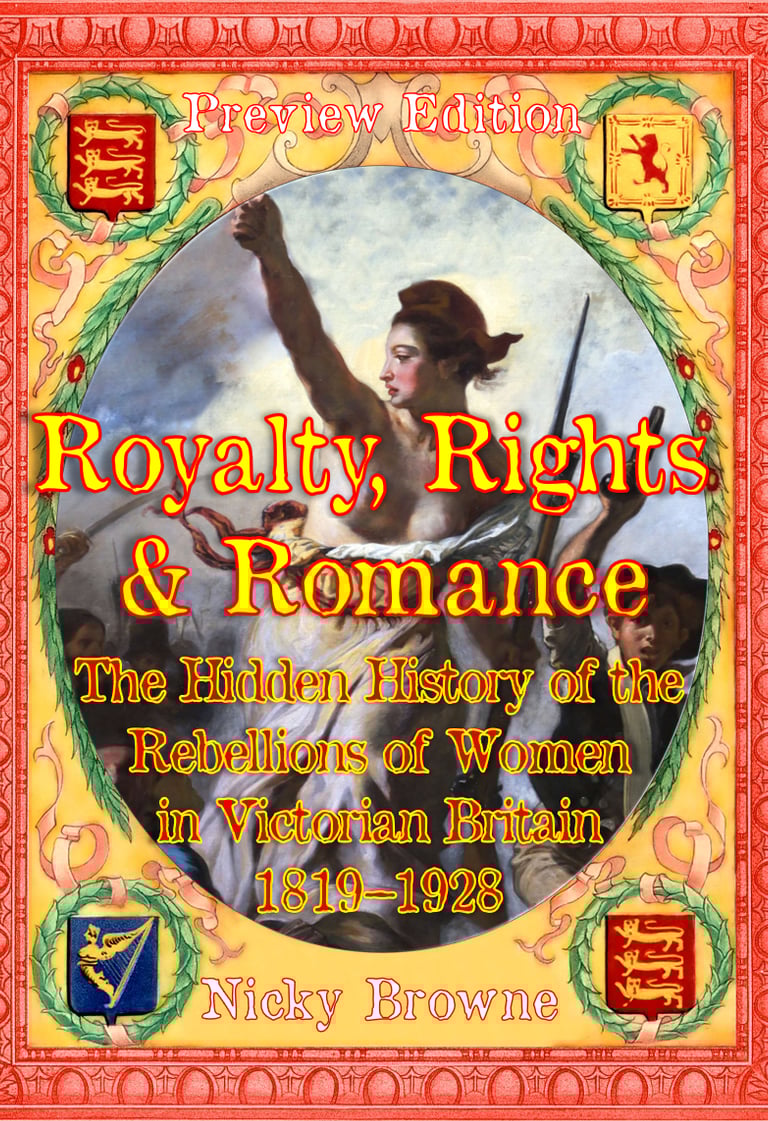
The history of Women in the reign of Queen Victoria (1837–1901) is barely considered. There was oppression and discrimination, but women had endured a feudal Patriarchy since 1066. British women had few rights compared to their Revolutionary sisters in America and France. Caroline Norton shamed the Queen into the Custody of Infants Act in 1839, then allowing limited Divorce in 1857. JS Mill, Lydia Becker and Millicent Fawcett campaigned for female Suffrage from 1866, opposed by the Queen from 1870, achieving little before the suffragettes waged war from 1905.
From 1869, women fought for the repeal of discriminatory legislation on Vice. This war was denied publicity, separated from suffrage. From 1881, they added protection for young girls from abuse. In 1885, their Bill raising the age-of-consent from 13 was lost. In despair, Josephine Butler turned to Radical wings of Press and Church. W.T. Stead’s investigations of brothels and juvenile vice broke sexual taboo. His tabloid headlines and graphic content shook England, while the Salvation Army made sure Her Majesty was not amused. A new Government faced an election deadline, swiftly passing new laws. Stead was sent to prison. A triumph for women. Except, it wasn’t.
The Church of England held scant influence on private morals after Oliver Cromwell. Now, their misogynist Puritan laws came back, rebranded for the Industrial Age. An amended Bill had been rushed through a near-empty Parliament, oppressing women and criminalising men. Social Purity was the new morality, an evangelical Crusade for Church and Empire, even America.
The cause of women was subverted, her Pyrrhic armies allied to the Church, their flaming swords vigilance and oppression. Scandal had forced a tipping point, where sexual liberation flipped to moral repression, overnight, in secret. Worse, women were now a disruptive force, not to be trusted with votes. This history was never written: of women, their cause betrayed; of freedoms, taken away; all hidden, beneath a cloak of silence.